Bluetooth Tracker OEM Solutions: A Complete Guide for Brands
For consumer electronics brands, corporate gift companies, and distributors ready to move beyond reselling generic trackers, an OEM Bluetooth tracker project is the natural next step. Instead of stocking someone else's branding, a brand can put its own logo, color, and packaging on a wallet tracker card, key finder, or waterproof smart tag — while relying on a sourcing partner for hardware selection, quality control assistance, and export documentation.
This guide explains how a Bluetooth tracker OEM project typically runs from brief to shipment, what can and cannot be customized, and how to compare OEM against ODM and plain private label reselling. AOIRV is a China-based smart tracking solutions supplier and sourcing partner supporting brands, distributors, and corporate gift buyers with OEM/ODM support.
Why Brands Choose OEM Bluetooth Tracker Development Over Off-the-Shelf Resale
Reselling an unbranded tracker is the fastest way to enter the category, but it offers little differentiation and no control over packaging, unboxing experience, or long-term product roadmap. An OEM project lets a brand build a recognizable product line — matching existing brand colors, adding a logo, and designing retail packaging that fits the rest of its catalog — while still working with an experienced sourcing partner rather than starting hardware development from zero.
The OEM Process with a Smart Tracking Solutions Supplier
Step 1: Product and Specification Selection
Start by choosing a base product direction — for example a wallet tracker card, a key finder, or a waterproof smart tag — and confirm the exact hardware revision, battery type, and compatibility direction being quoted.
Step 2: Branding and Customization
Define logo placement, housing color, and packaging design. Discuss instruction manual localization and barcode labeling requirements for your target retail or marketplace channel at this stage as well.
Step 3: Sample Approval
Request a physical sample reflecting your customization brief before committing to bulk production. Confirm branding accuracy, color match, and functional performance, since this is the last checkpoint before a full production run.
Step 4: Quality Control Assistance During the Production Run
Ask how quality control assistance is structured for your order — incoming material checks, in-process inspection, and pre-shipment inspection — and request documentation for each batch produced.
Step 5: Certification Documentation and Export
Confirm which certification documents apply to your destination market — typically CE, FCC, RoHS, REACH, UN38.3, or MSDS depending on battery type — and review export and shipping terms before the shipment is booked.
What Can and Cannot Be Customized on a Bluetooth Tracker
Housing color, logo printing or engraving, retail packaging, instruction manuals, and barcode labeling are typically available for OEM customization across most Bluetooth tracker product lines. What is generally not customizable is the core network functionality — for example, an Apple Find My compatible direction is a standardized technical framework rather than something a brand can modify, since it belongs to the underlying network rather than the accessory itself. Apple documents the boundaries of this framework for accessory makers on its Find My network accessory program page, which is worth reviewing before finalizing a customization brief so expectations are set correctly from the start.
OEM vs. ODM vs. Private Label Reselling
| Model | OEM | ODM | Private Label Reselling |
|---|---|---|---|
| Hardware Development | Existing hardware customized to brand specification | Supplier-designed hardware adapted before branding | No hardware involvement |
| Branding Control | Full logo, color, and packaging control | Full logo, color, and packaging control after design adaptation | Limited to reseller packaging, if any |
| Typical MOQ | Moderate, tied to customization scope | Often higher due to design adaptation | Lower, closer to standard reseller quantities |
| Best Suited For | Brands wanting a distinct product line quickly | Brands wanting more design input over time | Distributors testing a category before investing in branding |
OEM Bluetooth Tracker Product Directions Available
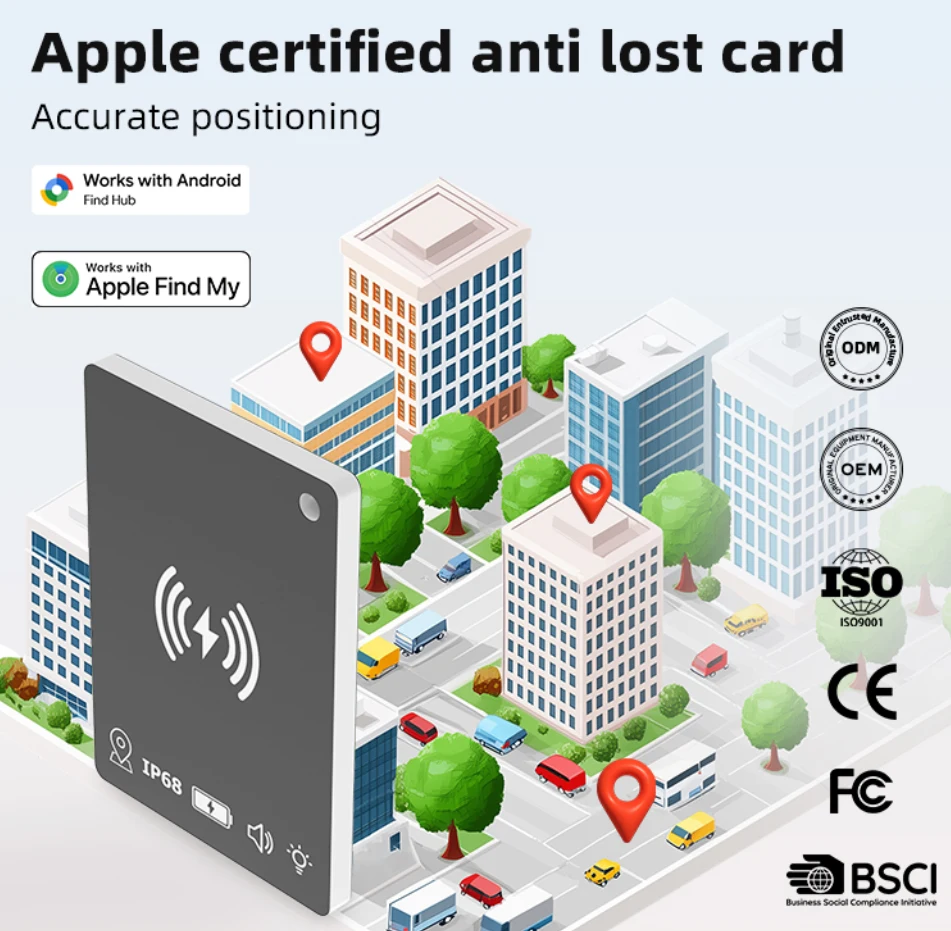
- Apple Find My Compatible Wallet Tracker Card — ultra-thin design suited to wallet and passport holder programs.
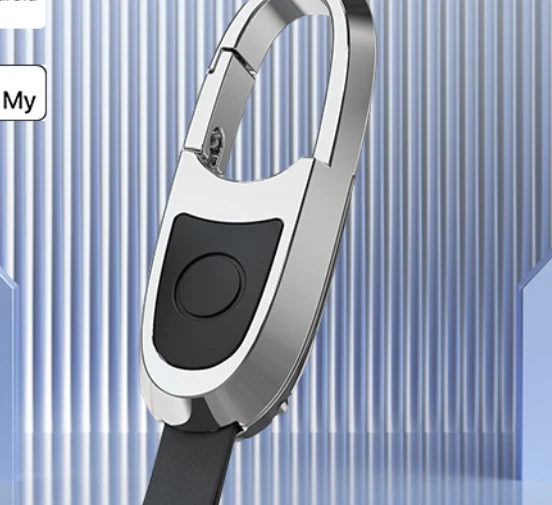
- Transparent Chip Key Finder — a distinctive design suited to keys, bags, and promotional gift lines.
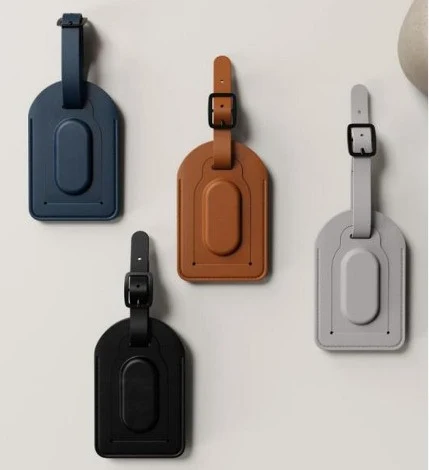
- IP68 Waterproof Smart Tag — built for luggage, outdoor gear, and travel accessory brands.
Review our OEM/ODM process page for the full branding and packaging workflow, and our certification page for the documentation approach confirmed per model.
A Typical OEM Project Timeline
While exact timelines depend on customization scope and order size, most OEM Bluetooth tracker projects follow a similar rhythm: an initial specification and branding brief, followed by sample development and approval, then a bulk production run, and finally quality inspection and shipment preparation. Brands planning a retail launch or marketplace listing date should build their calendar around confirmed sample and production lead times from their supplier rather than assuming a fixed industry-standard timeline, since customization complexity and order volume both affect how long each stage takes.
Packaging and Unboxing Considerations for OEM Brands
Packaging is often where an OEM project creates the most visible brand differentiation. Beyond logo placement on the product itself, brands typically decide between a retail blister card, a rigid gift box, or a minimal recyclable sleeve, depending on whether the product will sell through e-commerce, physical retail, or corporate gifting channels. Instruction manual localization, warranty card language, and barcode labeling for your target marketplace should be finalized during the branding stage so they can be produced alongside the bulk order rather than as a late addition that delays shipment.
Where OEM Projects Go Off Track
- Packaging finalized before functional sample approval. Consequence: a costly reprint if the hardware brief changes after artwork is locked.
- One MOQ assumed for every customization tier. Consequence: budget surprises when logo-only changes and full private label packaging turn out to sit at different minimums.
- Certification lead time underestimated for a new market. Consequence: a launch delay even after production has already finished.
Reviewing the checklist below with your supplier before finalizing a brief is the fastest way to catch all three before they become expensive.
Brand Purchasing Checklist Before Starting an OEM Project
Choosing a Sourcing Partner for Your OEM Project
Beyond price, the most useful signal when evaluating a sourcing partner for an OEM Bluetooth tracker project is how clearly they explain what is and is not customizable at your target order size. A supplier that is upfront about MOQ tiers, sample lead times, and certification requirements before you sign a purchase order is generally easier to work with through the full production cycle than one that only provides a quotation. For brands planning more than one product launch, it is also worth asking how the same sourcing partner can support future SKUs, since a consistent relationship across projects can shorten specification and approval time on later launches.
Frequently Asked Questions
What is the difference between OEM and ODM for Bluetooth trackers?
OEM typically means a brand customizes an existing hardware design with its own logo, color, and packaging. ODM typically involves a supplier offering a design that can be further adapted before branding. Many smart tracking solutions suppliers offer both directions depending on the buyer's development needs.
How long does a Bluetooth tracker OEM project usually take?
Timelines vary by customization scope, but typically include a sample approval stage followed by a bulk production run. Buyers should request specific sample and production lead times in writing rather than relying on general estimates.
What is the minimum order quantity for an OEM Bluetooth tracker project?
MOQ depends on the customization level requested. Logo-only customization usually has a lower minimum than full private label packaging with custom color and retail materials. Confirm MOQ tiers with your supplier before finalizing a brief.
Can brands customize the core tracking functionality of a Bluetooth tracker?
Core network functionality, such as an Apple Find My compatible direction, is generally standardized and not customizable. Customization is typically available at the hardware, housing, color, logo, and packaging level instead.
What quality control assistance is available during an OEM production run?
This typically includes incoming material checks, in-process inspection, and pre-shipment inspection, with documentation provided per batch. Ask your supplier how this is structured for your specific project before production begins.
Bring Your OEM Brief to AOIRV
Before you reach out, it helps to have three things ready: your target product direction, a rough idea of logo and packaging requirements, and your expected first-order quantity. With those in hand, AOIRV can respond with realistic MOQ tiers and a sample timeline instead of a generic price list.
| What to Prepare | Where to Start |
|---|---|
| Product direction | Browse the product range |
| Company background | Learn about AOIRV |
| Branding brief and quantity | Send an inquiry |
This guide is general OEM planning background and does not constitute a certification claim or partnership statement with Apple Inc. Treat any Find My compatible direction as a starting point for supplier discussion, not a substitute for verifying the exact hardware revision and documentation with your sourcing partner.