How to Choose an Apple Find My Tracker Supplier for Your Business in 2026
Apple Find My compatible trackers are a regular catalog addition for distributors, wholesalers, Amazon sellers, consumer electronics brands, and corporate gift buyers sourcing wallet tracker cards, key finders, and waterproof smart tags. For most of these buyers, the hardest part is rarely the product idea — it is choosing a smart tracker supplier in China that can be trusted with specification accuracy, documentation, and production communication over a multi-year buying relationship.
This guide walks through what "Apple Find My compatible" actually means for sourcing, the criteria that separate a dependable supplier from a risky one, and a checklist you can use before placing a sample or wholesale order. AOIRV is a China-based smart tracking solutions supplier and sourcing partner, and this article reflects the questions our own B2B buyers ask before starting a project.
Why the Apple Find My Tracker Category Matters for B2B Buyers
Consumers already carry the hardware needed to use a Find My compatible accessory — an iPhone or other Apple device — so the adoption barrier for a new tracker product is lower than it was for earlier Bluetooth locator gadgets that required a proprietary app. For distributors and Amazon sellers, that translates into faster customer onboarding and fewer support tickets about app setup. For consumer electronics brands and corporate gift buyers, it means a recognizable feature can be built into wallet accessories, keychains, and travel gear without designing and maintaining a companion app from scratch.
Not every supplier offering an "Apple Find My tracker" quotes the same hardware revision, documentation, or customization support, which is exactly why the evaluation criteria below matter more than the marketing language on a product listing.
What "Apple Find My Compatible" Means for B2B Buyers
Apple's Find My network allows supported accessories to be located through the Find My app, using the existing base of Apple devices as a crowd-located network. When a supplier describes a product as built toward an Apple Find My compatible direction, they are referring to a hardware and firmware design intended to operate within that network. This is a technical direction rather than a single universal certificate, and it can vary by hardware revision and firmware version — which is exactly why buyers should confirm compatibility for the specific model and production batch they intend to order, rather than assuming it applies uniformly across an entire product line.
For OEM and private label buyers, understanding this distinction also matters for marketing language. Overstating compatibility or certification claims on a product listing can create compliance risk on marketplaces such as Amazon, so it is worth asking your supplier for accurate, written language rather than reusing generic marketing copy found elsewhere.
9 Criteria for Evaluating an Apple Find My Tracker Supplier
1. Product Compliance and Compatibility Documentation
Ask for the exact model name, hardware revision, and firmware version being quoted, along with written confirmation of the compatibility direction for that specific revision. Two products that look identical in a catalog photo can differ meaningfully once you compare their spec sheets. Apple publishes its own accessory program details on the Find My network accessory program page, which is a useful reference point when a supplier's claims need independent verification.
2. OEM/ODM Support and Customization Range
Confirm what can be customized at your target order quantity — housing color, logo printing or engraving, retail packaging, instruction manual localization, and barcode labeling. A supplier that offers genuine OEM/ODM support should be able to walk you through each of these options with associated MOQs.
3. Quality Control Assistance and Inspection Process
Ask how the supplier handles quality control assistance during production — incoming material checks, in-process inspection, and pre-shipment inspection. Request to understand how defects are handled and what documentation is provided per batch.
4. Sample Policy and Turnaround
A reliable supplier should have a clear sample process: cost, lead time, and how closely the sample represents the eventual bulk production unit. Always test samples before committing to a bulk order, since this is the only way to confirm real-world performance, connection range, and battery life claims.
5. MOQ Structure Across Customization Levels
MOQ is rarely a single number. A plain reseller order, a logo-only order, and a full private label packaging order typically carry different minimums. Get these tiers in writing early so you can plan cash flow and launch timing accurately.
6. Battery Type and Certification Documentation
Battery type affects both user experience and shipping documentation. Ask specifically about UN38.3 and MSDS relevance for lithium battery shipments, plus CE, FCC, RoHS, and REACH depending on your target market, and request confirmation in writing per model.
7. Waterproof and Durability Rating Verification
If a waterproof rating such as IP68 is advertised, confirm whether it applies to the entire product line or only specific SKUs. This is a common area where buyers assume broader coverage than what is actually certified.
8. Export and Logistics Experience
A supplier familiar with export documentation, battery-related shipping paperwork, and your destination market's import requirements will save time compared with one that has only handled domestic sales.
9. Communication and Lead Time Transparency
Look for a supplier that gives specific sample and bulk production lead times rather than vague estimates, and that responds consistently throughout a project rather than only during the initial quotation stage.
Sourcing Direct from a Supplier vs. Trading Company vs. Marketplace Reseller
| Sourcing Route | Direct Smart Tracker Supplier | Trading Company | Marketplace Reseller |
|---|---|---|---|
| Specification Accuracy | Direct access to model and hardware revision details | Depends on how closely trading company tracks source details | Often limited to listing description |
| OEM/ODM Customization | Full range discussed directly with sourcing partner | Possible, but adds a communication layer | Rarely available |
| Quality Control Assistance | Can be coordinated directly through the project | Depends on trading company's oversight | Not applicable |
| MOQ Flexibility | Negotiable per customization tier | Often fixed by trading company policy | Single-unit purchase only |
| Best Suited For | Distributors, wholesalers, brands, corporate gift buyers | Buyers wanting a single intermediary contact | One-off personal or small test purchases |
AOIRV's Apple Find My Compatible Product Range
AOIRV supports distributors, wholesalers, Amazon sellers, consumer electronics brands, and corporate gift buyers with three core product directions:
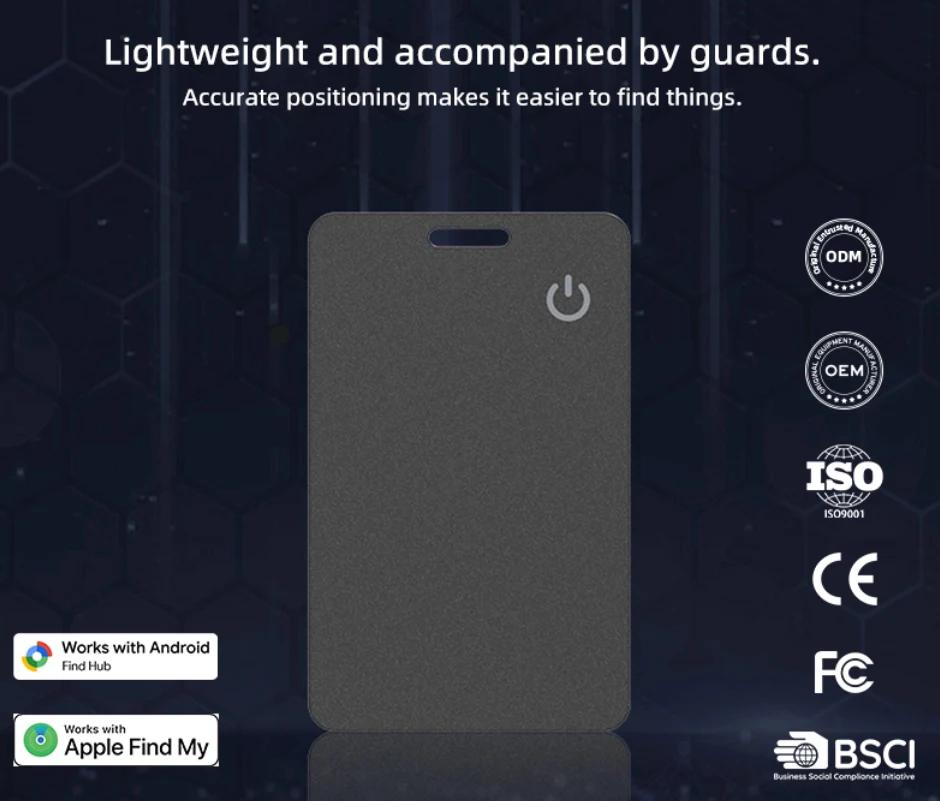
- Apple Find My Compatible Wallet Tracker Card — an ultra-thin card designed to fit a wallet or passport holder without adding bulk.
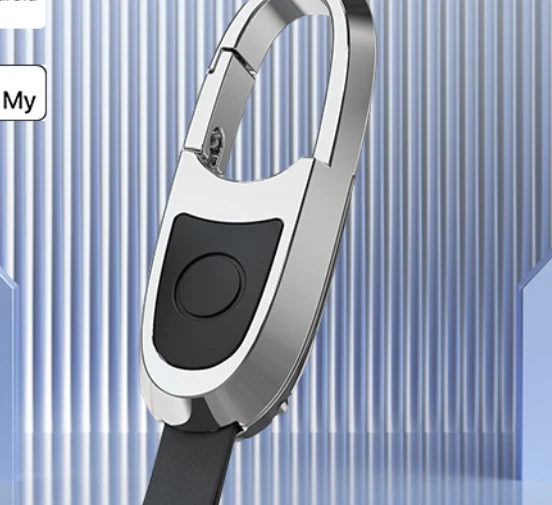
- Transparent Chip Key Finder — a compact, visually distinctive tracker suited to keys, bags, and promotional gift programs.
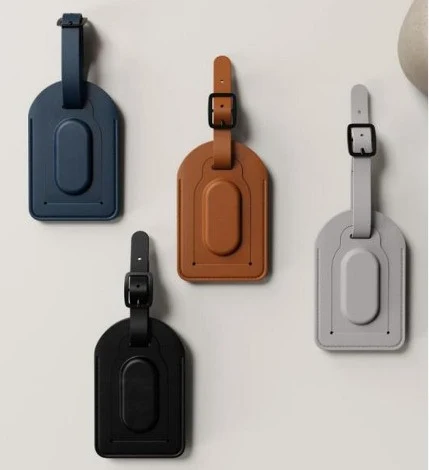
- IP68 Waterproof Smart Tag — built for luggage, outdoor gear, and travel accessory lines that need extra protection against water and dust.
Each product direction can be discussed with logo customization, retail packaging, and quality control assistance once your target market, model, and order quantity are confirmed. Learn more about our OEM/ODM process and review our certification page for the documentation approach we confirm per model.
Supplier Evaluation Checklist
Where Buyer Evaluations Go Wrong
The evaluation mistake we see most often has nothing to do with price — it is treating "Apple Find My compatible" as if it were a single fixed certification rather than a hardware and firmware direction that needs confirming per model. A buyer who accepts this phrase at face value, without asking which revision it applies to, can end up with a bulk shipment that behaves differently from the sample that was approved months earlier.
A related pattern shows up around waterproof ratings: buyers reasonably assume a rating advertised for one SKU in a product family applies to every SKU in that family, when suppliers sometimes reserve it for a specific variant only. Neither mistake is caused by dishonesty on the supplier's side as often as it is caused by a buyer not asking the follow-up question. The checklist above is built around the follow-up questions that close this gap.
Frequently Asked Questions
What does "Apple Find My compatible" mean when evaluating a supplier?
It describes a hardware and firmware direction designed to work within Apple's Find My network, so buyers can locate the accessory through the Find My app rather than a separate branded app. Compatibility should be confirmed per exact model and hardware revision, since it is not a single fixed certification.
Is it better to source directly from a smart tracker supplier in China or through a trading company?
Sourcing through a supplier that also acts as a sourcing partner can reduce communication layers and give buyers more direct visibility into OEM customization, quality control assistance, and lead times, compared with a pure trading company that resells without production oversight.
What MOQ should distributors and Amazon sellers expect for OEM customization?
MOQ varies by customization level. Logo printing and retail packaging typically require a higher minimum than a plain reseller order. Buyers should request MOQ tiers in writing for their target model before committing to a project.
What certifications should a smart tracker supplier be able to provide?
Depending on the destination market, buyers should ask about CE, FCC, RoHS, REACH, UN38.3, and MSDS documentation for the specific model and production batch, not a general company-level assurance.
How long does a typical sample and bulk order cycle take?
Sample lead time and bulk production lead time differ by model and customization scope. Buyers should confirm both timelines in writing and build launch schedules around the confirmed dates rather than estimates.
Start Your Supplier Evaluation
Print or copy the checklist above and run it against every quotation you receive — it is the fastest way to tell a genuine smart tracking solutions supplier and sourcing partner apart from a reseller with no direct production oversight.
Request Product CatalogBrowse Product RangeAbout AOIRV
AOIRV is an independent sourcing partner and is not affiliated with, endorsed by, or certified by Apple Inc. References to the Find My network describe a technical direction only; confirm compatibility, certification, and battery documentation with your supplier for the exact model and batch you intend to order.